A Siddhartha Guide

Buddhism and Anxiety

Anxiety, in Buddhist thought, isn't a defect to be eliminated. It's a movement of mind to be understood. The suttas describe restlessness and worry plainly, name them, and offer practices for working with them. This guide pulls together six of those teachings and how they translate into something you can actually do tonight, without any prior background in Buddhism.

Listen on Siddhartha
What Buddhism actually says about anxiety

The Pali Canon, the earliest preserved record of the Buddha's teachings, doesn't use the modern word 'anxiety.' But it describes the underlying experience with unusual precision. The Buddha lists 'restlessness-and-worry' (uddhacca-kukkucca) as one of the Five Hindrances, five recurring patterns that pull the mind away from clarity. Worry about the future, regret about the past, a body that won't settle: these were already mapped 2,500 years ago.

What's striking about the Buddhist approach is the absence of judgement. Anxiety is not framed as a personal failing or a sign that something is wrong with you. It is framed as something the mind does, a weather pattern that arises and passes. The work is not to eliminate it but to recognise it, sit with it, and gently reduce its grip through specific practices. The teachings on anxiety and Buddhism are practical, not therapeutic in the modern clinical sense.

This guide presents perspective and practice. It is not a substitute for professional care. If your anxiety is severe or persistent, please speak with a qualified clinician. Buddhist practice and modern mental health support are not in competition, and many practitioners use both.

1. The two arrows

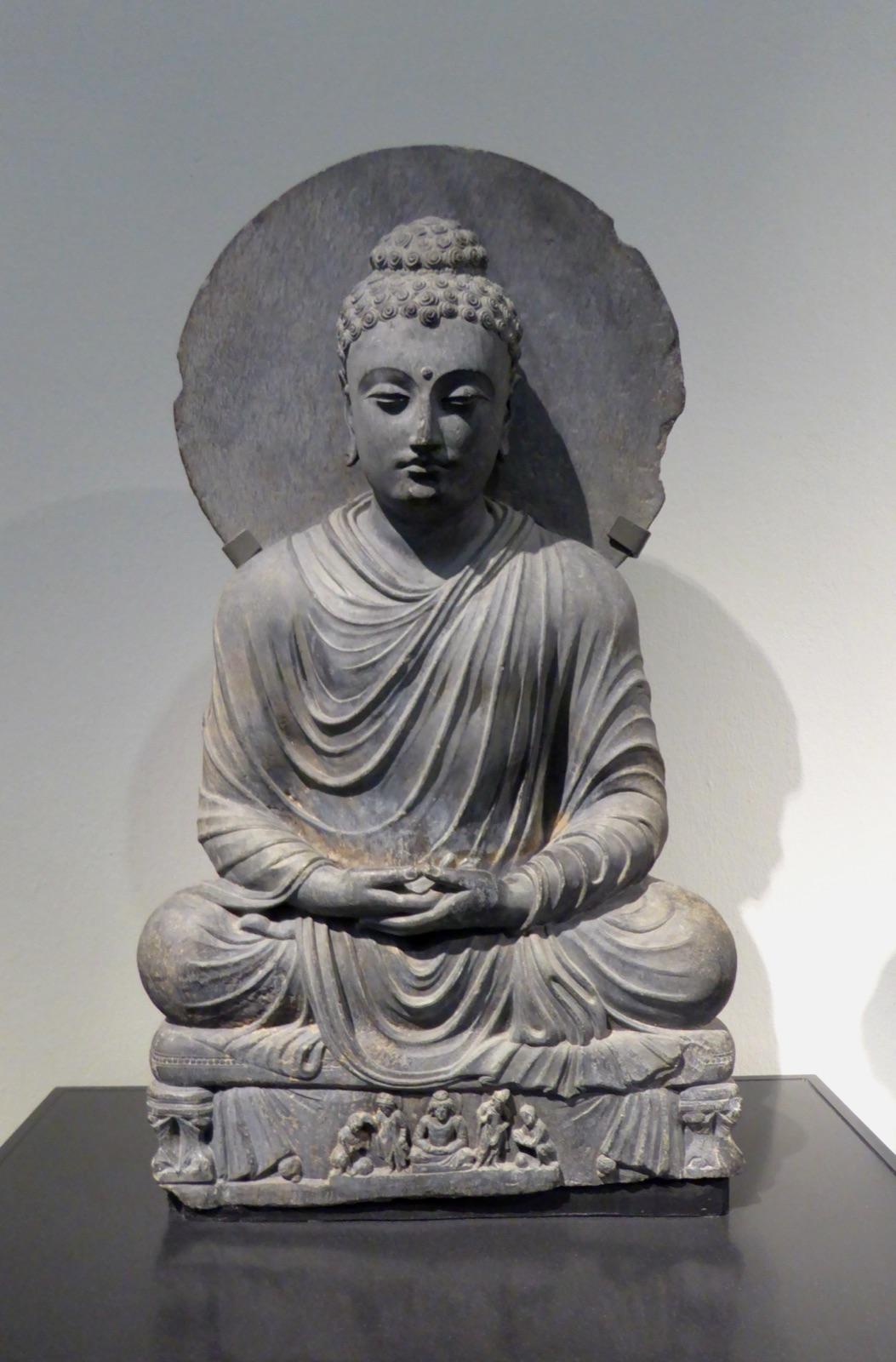
Meditating Buddha statue from Gandhara, Kushan dynasty (200-400 CE)

Photo: Ethan Doyle White, CC BY-SA 4.0, via Wikimedia Commons. Gandharan Buddha at the V&A.

In the Sallatha Sutta (SN 36.6), the Buddha describes a person struck by an arrow. The pain of the arrow itself is the first arrow. But most people, he says, then strike themselves with a second arrow: they grieve, lament, and resist. The second arrow is the suffering we add on top of the pain.

Anxiety is largely the second arrow. The thing you're worried about may or may not actually happen, but the worrying itself is a separate event the mind manufactures. Recognising this gap, the difference between what is actually here and the story the mind is telling about it, is the first move in working with anxious thought. You do not have to stop the first arrow. You only need to stop firing the second.

2. Restlessness and worry as a known pattern

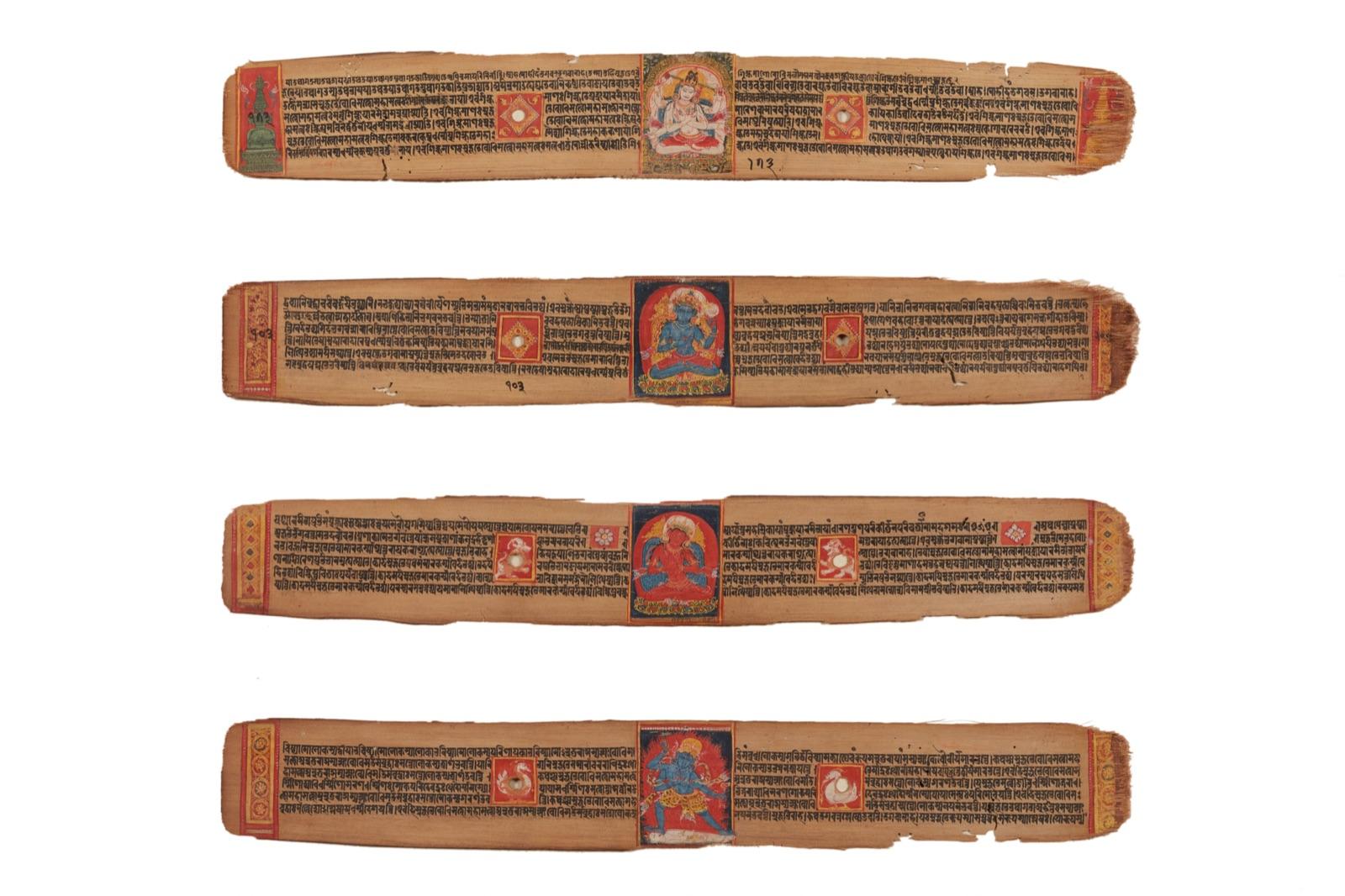
Palm-leaf manuscript pages from a 12th-century Ashtasahasrika Prajnaparamita text

12th-century Ashtasahasrika Prajnaparamita manuscript, public domain, via Wikimedia Commons.

The Buddha taught the Five Hindrances as the five mental states most likely to obstruct meditation: sensual desire, ill-will, sloth-and-torpor, restlessness-and-worry, and doubt. Anxiety lives mostly in the fourth one: uddhacca-kukkucca, a churning combination of mental agitation and self-recrimination.

What's useful here is simply that the pattern is named. When you can label what's happening, 'this is restlessness, this is worry,' the mind shifts from being inside the pattern to being slightly outside it, observing. The Buddhist tradition treats this naming as a real practice, not a trick. Anxiety has been classified, studied, and given a vocabulary for two-and-a-half millennia.

3. Returning to the breath

A misty forest road in Coonoor, Tamil Nadu

Photo: Smritivs, CC0, via Wikimedia Commons.

The Anapanasati Sutta (MN 118) is the Buddha's principal instruction on mindfulness of breathing. The practice begins simply: sit, let the body settle, and notice the breath as it comes in and as it goes out. When the mind wanders, and it will, return without judgement to the breath.

For anxiety specifically, the breath is useful because it is the one bodily process that is both involuntary and available to deliberate attention. Anxious thinking accelerates the breath; deliberate, gentle attention to a slow exhale slows it. You are not trying to stop the anxious thoughts. You are giving the mind a steadier object to hold while the thoughts pass through. Five to ten minutes is enough to begin.

4. Naming the mental state

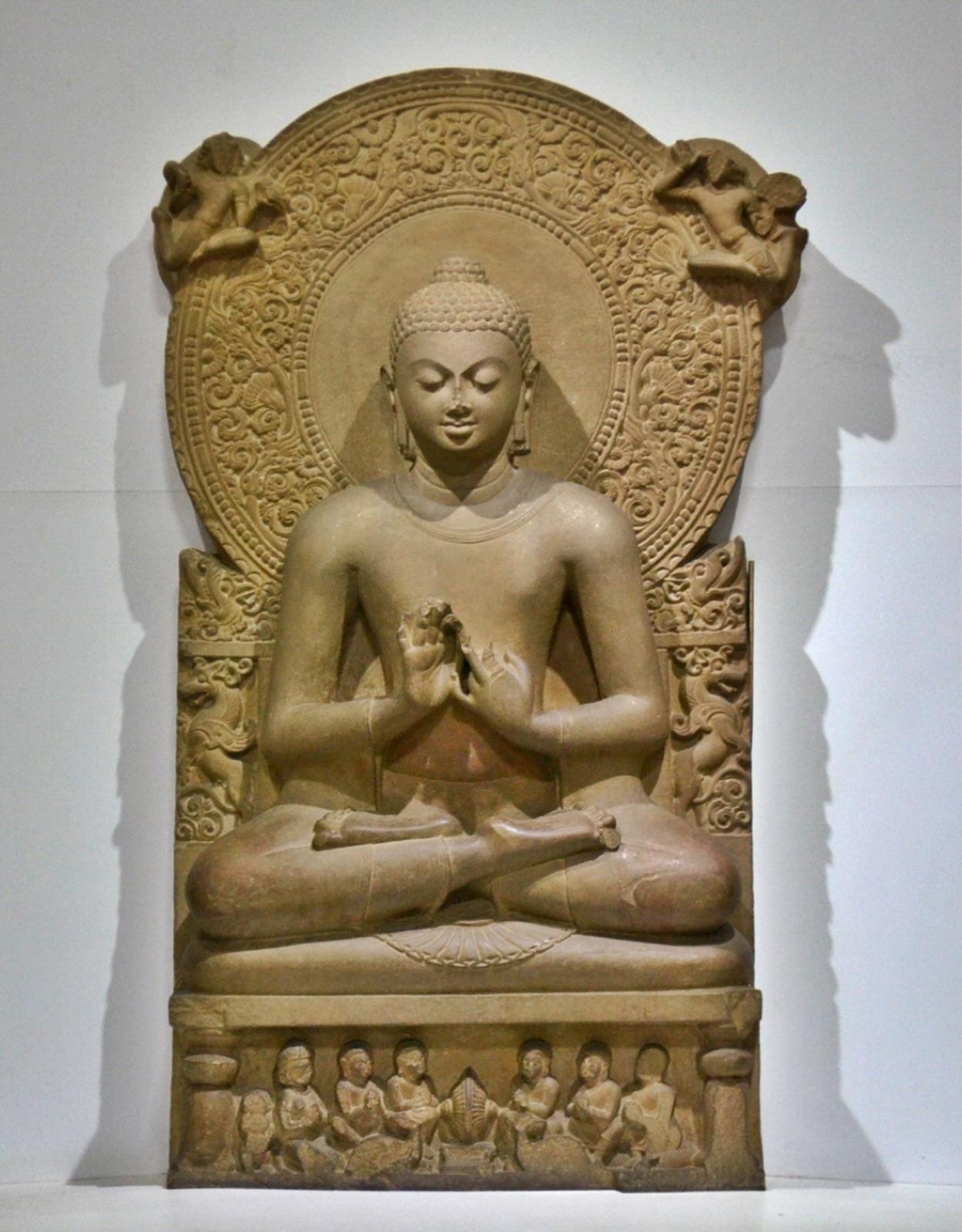
Sandstone seated Buddha from 4th-century Sarnath, dharmachakra mudra

Photo: Tevaprapas Makklay, CC BY-SA 3.0, via Wikimedia Commons.

The Satipatthana Sutta (MN 10) describes four foundations of mindfulness: body, feelings, mind, and mental objects. The third foundation, mindfulness of mind, asks you to notice the quality of consciousness itself. Is the mind agitated? Tight? Spacious? Contracted?

In practice this looks like a quiet labelling. As anxiety arises, you note: 'tightening,' 'rushing,' 'planning,' 'fear.' The label does not push the feeling away. It places the feeling inside a frame. Modern psychology has a name for something close to this: 'affect labelling,' which research has linked to reduced amygdala activation. The Buddhist practice predates the research by twenty-five centuries, and it works for the same reason. Naming creates distance.

5. Seeing through the story

Tree-covered rocks reflected in the clear water of Hintersee in the Berchtesgaden Alps

Photo: Ekki3, CC BY 4.0, via Wikimedia Commons.

Anxious thoughts present themselves as urgent and personal. They feel like 'me'. My fear, my worry, my doom. The teaching of anatta, or non-self (Anatta-lakkhana Sutta, SN 22.59), suggests something different: thoughts arise from causes, persist for a moment, and pass. They are events the mind hosts, not the mind itself.

This is not a denial of the feeling. The anxiety is real; it just is not who you are. A useful prompt: when an anxious thought arises, ask 'whose thought is this?' and watch what happens. For most people the question creates a small pause, a gap between the thought and the identification with it. That gap is where practice happens.

6. Loving-kindness for the anxious mind

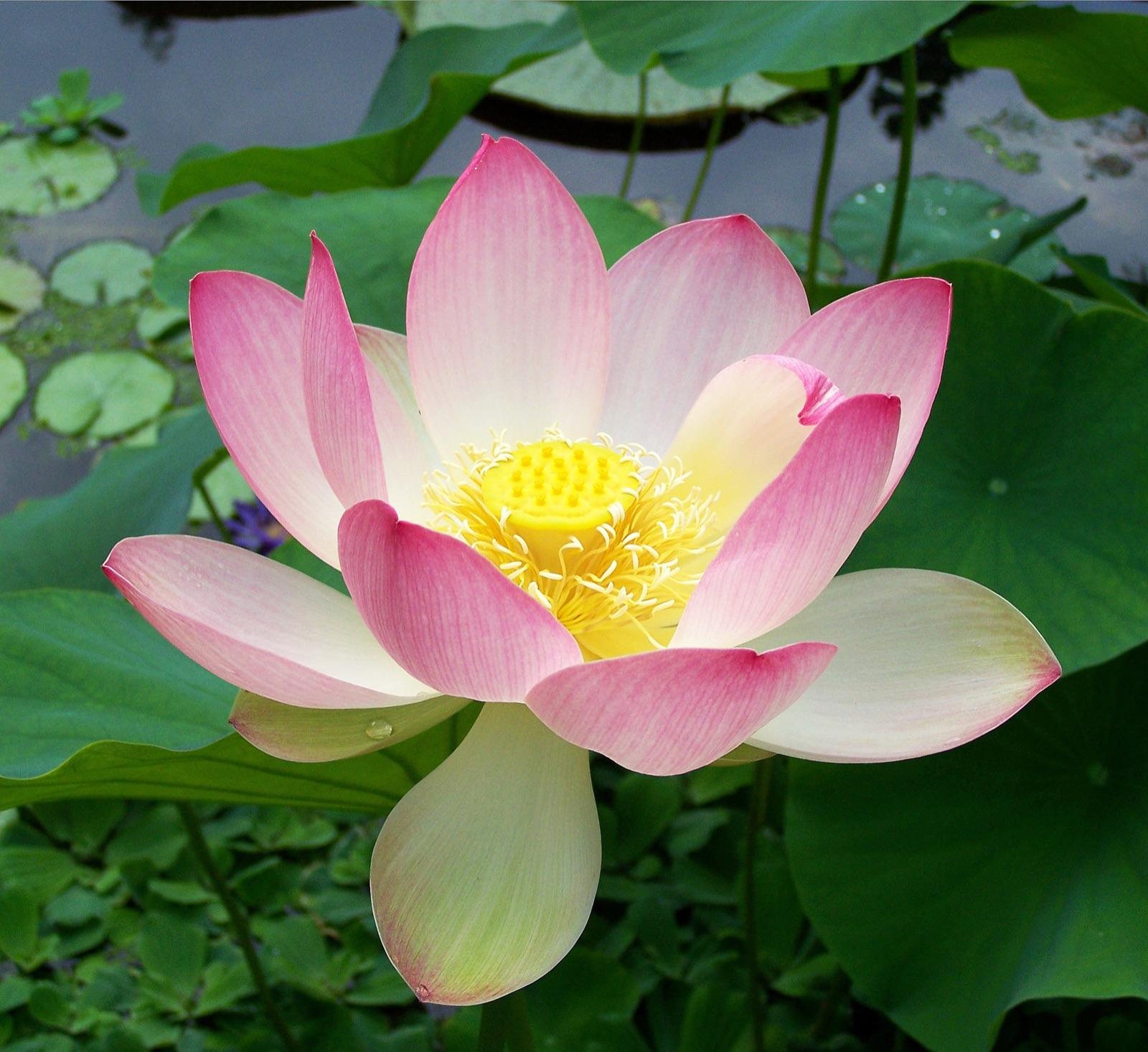
Sacred lotus (Nelumbo nucifera) in bloom

Photo: T. Voekler, CC BY-SA 3.0, via Wikimedia Commons.

Anxiety often comes paired with a harsh inner voice, frustration at being anxious in the first place. The Karaniya Metta Sutta (Snp 1.8) describes a different posture: extending kindness toward all beings, including yourself. The traditional phrases run something like: may I be safe, may I be peaceful, may I be healthy, may I live with ease.

It can feel awkward at first. Saying kind things to yourself when you are anxious does not match the urgency of the anxious mind. That is precisely why it works. Metta breaks the loop of self-criticism that keeps anxiety amplified. You don't have to mean the words completely. Saying them and noticing the response is the practice.

Practice

A short practice you can do tonight

If you are feeling anxious now, try this. It draws on three of the teachings above.

  1. Sit or lie down comfortably. Close your eyes if that feels alright.
  2. Notice that you are anxious. Silently label it: 'restlessness,' 'worry,' or just 'this.'
  3. Bring attention to your breath. Don't change it, just notice the in-breath and the out-breath for ten cycles.
  4. On each out-breath, silently say one phrase: 'may I be at ease.'
  5. When the mind wanders into the worry, gently return to the breath and the phrase. No judgement.
  6. Five minutes is enough. The aim is not to stop the anxiety. The aim is to be with it differently.

Modern reflex vs Buddhist response

The contrast below is a simplification, but it captures how the Buddhist response to anxiety differs from the most common reflexes.

SituationModern reflexBuddhist response
Identifying with the thought"I am anxious." The thought becomes the self."There is anxiety." The thought is observed, not owned.
Trying to make it stopDistract, suppress, or reason with the worry.Let it be present, return attention to a steady object (the breath).
Self-criticismFrustration: "Why am I like this?"Kindness: extend metta toward the part of you that is suffering.
GoalEliminate the feeling.Understand the feeling. Reduce the second arrow.

Stories from the same tradition, narrated for sleep

The Siddhartha app reads the Buddha's life and the Jataka tales aloud in a calm, narrated form designed to slow an anxious mind toward sleep. Each story is paired with ambient sound and a sleep timer.

Download Free

Frequently Asked Questions

Does Buddhism cure anxiety?

No, and Buddhist teachers generally don't make that claim. Buddhism offers a framework for understanding anxiety and a set of practices that, with consistency, tend to reduce its grip. People with severe or persistent anxiety should consult a qualified mental health professional. Buddhist practice and modern care can complement each other.

What does the Buddha say about anxiety directly?

The closest direct teaching is the Sallatha Sutta (SN 36.6), the discourse on the two arrows. The Buddha distinguishes between unavoidable pain and the additional suffering we create by reacting to it. Anxiety lives largely in the second category. The Five Hindrances also explicitly name 'restlessness-and-worry' (uddhacca-kukkucca) as a recognised mental obstacle.

How is Buddhist mindfulness different from positive thinking?

Positive thinking tries to replace negative thoughts with affirming ones. Buddhist mindfulness does something different: it notices the thought, labels it, and lets it pass without engaging. The aim is not a different content of thought but a different relationship to thought. You can practice it whether the thought is positive, negative, or neutral.

Can I practice these techniques without being Buddhist?

Yes. The practices in this guide (breath awareness, naming mental states, loving-kindness) are widely used outside any religious frame, including in secular mindfulness programs and clinical settings. Engaging with the Buddhist context can deepen the practice, but it is not a prerequisite.

Where should a beginner start?

Start with the breath. Five minutes a day, sitting comfortably, attending to the in-breath and out-breath, is the foundation everything else rests on. From there, the labelling practice (step 4) and metta phrases (step 6) are the easiest to add. The Anapanasati and Satipatthana suttas are the original instruction texts if you want to read further.

What if I get more anxious when I sit still?

Common, and recognised in the tradition. A racing mind that meets a still body can feel worse before it feels better. This is part of why restlessness-and-worry is named as a hindrance to meditation. If sitting feels too charged, try a slow walking meditation or listen to a narrated story instead. The Siddhartha app's stories are designed for this. They give the mind a calm object without requiring formal practice. If what you're experiencing has more acute, body-level fear in it, the companion guide on Buddhism and fear covers different practices for that.